Top 10 Essential System Design Concepts Every Developer Should Master
System design is always been a debating topic between developers and same for the companies who are going to use this concepts but system design is yet a very crucial in developing the most robust, scalable, and high-performance applications. Whether you’re a complete begginer(noob) or an experienced like me(just joking) developer, mastering the foundational concepts can make a significant difference in your carrer. This article will walk you through the top 20 system design concepts every developer should know to build an efficient and yet a scalable services. So just sit tight and enjoy the concept
Lets get started
1. Load Balancing
Load Balancing is the most intersting topic in it’s own. It is a practice of distributing the computational workloads evenly between two or more computers.
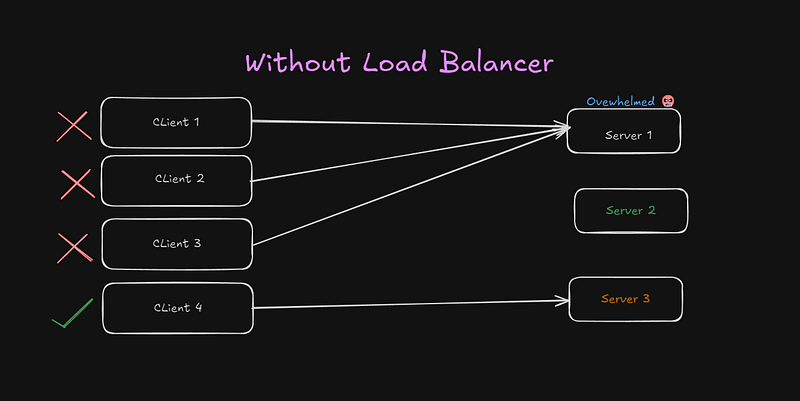
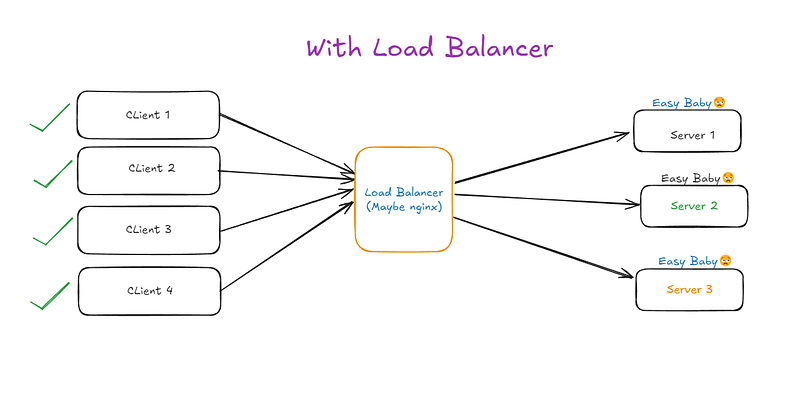
This Load Balancer bad boy distribute the system network traffic across multiple servers, ensuring no single server is overwhelmed.
2. Caching
Caching temporarily stores temporary data in fast access hardware such as RAM, everybody know that but why we use them?
SO in various cases like talking to the data if the user with particular username exists or not if the userbase is small then there is no tension but if the userbase is big enough then trying to access the database is overwhelming so we use “redis” like database which have the power to cache the frequently used things or entries which drastically reduces the need to access the underling slower storage layer.
Caches are generally used in heavy application workloads, such as Q&A portals, gaming, media sharing, and also the social networking. Cached information can include the results of database queries, computationally intensive calculations, API requests/responses and web artifacts such as HTML, JavaScript, and image files.
3. Database Sharding
It is a architecture plan which is implemented to the databases which is fairly related to the horizontal partioning, which is also known as the practice of separating a one table’s row into multiple different tables which are also known as partitons. Each of the divided or divided partitions has the same schema and a column, but also entirely different rows. But the difference is that the data which is stored in this partitions are differnt, unique and independent of each other.
For sure each partitions are divided into different servers allowing the system or the codebase to identify the particular required server to catch. Even in various codebases we also see that the “shard” is defined hardcodedly.
4. Microservices Architecture
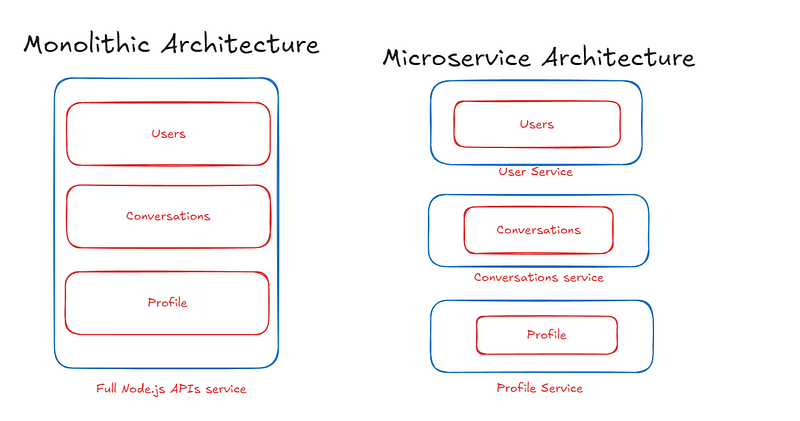
It is a architectural and organizational approach to software developement where software is composed of small independent services which communicate over well defined APIs. These services are owned by small and self-contained teams.
This is the advancement in the behavioural approach of the monolithtic architectures, where all processes are tightly copuled and run as a single service. This means if there is sudden spike in any of the application, the entire architecture must be scaled. But in the case if the microservices we only need to scale the features which is mostly in demand. This all architectures coomunicate with the light-weight APIs.
5. API Gateways
An Api gateway is an API management tool which sits between the APIs and client request and acts as a route by maintaining the common API services which are require must to do such as user authentications, rate limiting, and statistics.It is one of the part of an API management system. The API gateway intercepts all incoming requests and sends them through the API management system, which handles a variety of necessary functions.
Some of the common functions include authentications, routing, rate limiting, billing, monitoring the analytics, policies and the required alerts, and security.
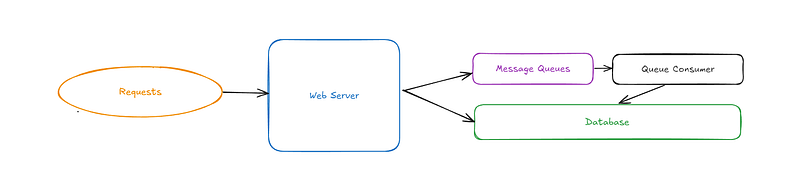
6. Message Queues
This is strategical plan in which different parts of the applications communicates with each other asynchronously, by sending the message leveraging the concept of queues. A message queue provides temporary storage between the sender and the reciever. Note that as message queues acts as the temporary storage between sender and reciever dont compare with them as the caching principles. Here Asynchronous processing allows a task to call a service, and move in to the next task while the service processes the requests at it’s own pace
7. Rate Limiting
Recently i am using a free API where there is written rate limit over certain APIs there i found that concept of rate limiting is most important to overcome the abusive use of our services and maintain safe and sustainable system environment. This is commonl used in APIs to prevent overload and ensure the fair resource distributions.
Most of the abusive requests are done by the bots which sents multiple requests simultaneously, it puts a cap on how often someone can repeat an action within a certain timeframe for instance, trying to download the picture repeadately to the systems.
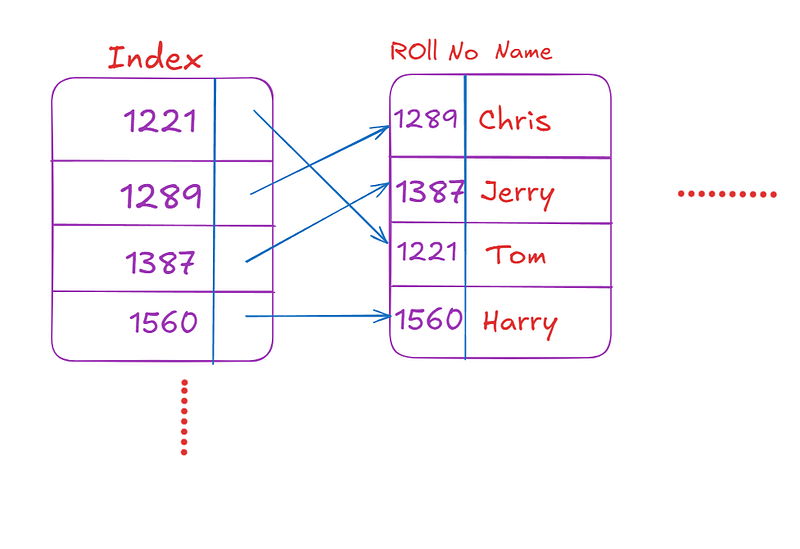
8. Indexing
Indexing is the fundanmental concept which is used to optimize the database queries’ performance. It is a technique which is merely used to creat a separate data structures called an index, which stores a mapping between the values in a specific column of a table and the location of corresponsing data row. This approach helps the database management systems to quickly and efficientl locate the data it needs without scanning the entire table.
9. Horizintal Vs. Vertical Scaling
Scaling is the foremost becomes the most important concern when the userbase of the app increases and to tackle there are various methods to do this Horizontal and vertical scaling.
- Horizontal Scaling- Adding more servers to distribute the upcoming requests loads.
- Vertical Scaling- Increasing the number of instances of computing power in the computer system typically the memory and processing power.
Both of these are used with careful considerations based on the requirements.
10. Data Partitioning
Lastly and one of the most important concepts of the system design is the partioning. Partioning splits the data based on criteria(e.g., range, hash) to improve query performance and merely prevent the scalability issues while versioning the upgradations. It is ost commonly used in large datasets to optimize read/write operations across distributed systems.
Conclusion
By concluding this there are also many more concepts in the system but if you master all of the mentioned above you are good to go as software developer with over $300,000 or also able to land a seven figure Job in big MNC companies like Google, Accenture i am just kidding i know these concepts also but i am an homeless so like this post and support me, Thank you for reading.
Follow me on